

Paid Account Showing Different Balances Across Credit Bureaus? What You Can Do.
Paid off an account, but one credit bureau still shows a balance? Learn why the reports differ, how to dispute them, and when the FCRA is able to protect you.
Table of ContentPaid Account Showing Different Balances Across Credit Bureaus? What You Can Do.
You paid the account off. You have the confirmation letter to prove it. Then you pull your credit reports and find that Experian shows a $0 balance, TransUnion shows $1,240, and Equifax still lists the account as open with a payment due.
That kind of mismatch is more than an annoyance. A balance you no longer owe can raise your debt-to-income ratio, drag down your credit scores, and cost you a loan approval or a better interest rate. If one credit bureau has it right and another does not, at least one of those reports is likely inaccurate.
At Raburn Kaufman LLC, we hold credit bureaus and lenders accountable when they report information that is wrong. If a paid account still shows a balance on your report, learn more about how we handle credit report errors and what your options may be.

A Paid Account Should Show a $0 Balance on Every Report
Once you pay off an account, every credit bureau that reports it should show a $0 balance and a status such as “paid” or “closed.” Small timing gaps happen because lenders send updates to each bureau on their own schedules. A gap that lasts more than a couple of reporting cycles is different.
The Fair Credit Reporting Act (FCRA) is the federal law that requires credit bureaus to follow reasonable procedures to keep your report accurate. If one report still shows money owed after you paid in full, that report may be inaccurate, and the FCRA gives you the right to dispute it.
Related:
Learn more about how we handle
How Equifax, Experian, and TransUnion End Up With Different Numbers
The three major credit bureaus do not share one database. Each one keeps its own file on you, built from data that lenders, collection agencies, and other “furnishers” send in. A furnisher is any company that reports your account information to a credit bureau.
Because each bureau gets its own feed, the same account can look different from one report to the next. Common causes include:
- Staggered reporting dates. A lender may update Experian on the 5th and TransUnion on the 20th, so one report lags behind for a few weeks.
- A furnisher that stopped reporting. Some lenders stop sending updates to a bureau after an account closes, which freezes the last balance in place.
- A sold or transferred debt. When a debt moves to a collection agency or a new servicer, the old tradeline may keep the balance while the new one reports it again.
- Data entry and matching errors. A bureau may attach the payoff update to the wrong account, or fail to process it at all.
- Duplicate tradelines. The same debt can appear twice, once paid and once still owing.
Timing gaps often clear up within a reporting cycle or two. The other causes often do not, and they can leave an old balance on your report for years.
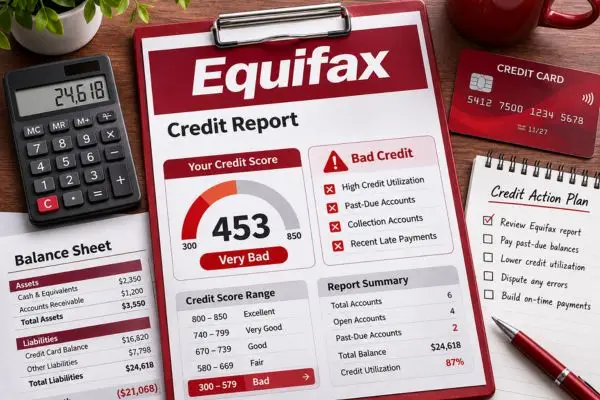
When a Balance Mismatch Becomes an FCRA Problem
The FCRA puts accuracy duties on both the credit bureaus and the companies that report to them. A wrong current balance on a paid account can trace back to either one.
What Credit Bureaus Must Do
Equifax, Experian, and TransUnion must follow reasonable procedures to assure the maximum possible accuracy of the information in your report (15 U.S.C. section 1681e(b)). When you dispute an entry, they must also conduct a reasonable reinvestigation rather than simply repeat what a lender told them.
What Lenders and Collectors Must Do
Furnishers may not report information they know or have reason to believe is inaccurate. Once a bureau forwards your dispute, the furnisher must investigate, review the information you sent, and correct what it gets wrong (15 U.S.C. section 1681s-2).
A balance on a paid account is not a matter of opinion. Either you owe the money or you do not. When a payoff letter or bank record shows a $0 balance and a report still shows a debt, that entry may be inaccurate under federal law.
The mismatch between bureaus can also be useful evidence. If Experian shows the account paid and Equifax does not, the correct information clearly exists. The question becomes why one bureau or furnisher failed to get it right.
Related:
Our attorneys at Raburn Kaufman offer
The Real Cost of a Balance You Already Paid
A leftover balance on one report can do more damage than people expect. It makes you look like you carry more debt than you do, and lenders price that risk into every decision.
One Inaccurate Report Can Be Enough
Many lenders pull just one or two bureaus, so the wrong report may be the only one a lender sees. An inflated balance can push up your credit utilization and your debt-to-income ratio at the same time. The result may be a mortgage denial, a lower credit limit, or a higher interest rate on a car loan. Some consumers even start getting collection calls again on a debt they settled years ago.
Hold On to Any Denial Letter
If a lender denied you or offered worse terms because of a credit report, it generally has to send you an adverse action notice naming the bureau it used. Keep that letter. It shows which report caused the harm and when it happened.

Build Your Paper Trail Before You Dispute
Strong documentation makes a dispute harder to brush off. Before you contact anyone, gather:
- Current copies of all three reports from AnnualCreditReport.com, the free site authorized by federal law
- Your payoff letter, paid-in-full letter, or settlement agreement
- Bank statements or receipts showing the final payment cleared
- Any letters from the lender or collector confirming a $0 balance
- Denial or adverse action letters you received after the payoff
Circle the account on each report and note the balance, status, and date reported. Side-by-side copies make the mismatch easy for anyone to see.
Disputing the Wrong Balance With Each Credit Bureau
You only need to dispute with the bureau or bureaus showing the error. If Experian already reports $0, focus on the others.
- File a written dispute with each bureau that has it wrong. Online portals work, but certified mail creates a clear record. State that the account was paid in full, give the correct balance, and attach copies (never originals) of your proof.
- Send the same dispute to the furnisher. Writing to the lender or collector directly puts it on notice too.
- Track the deadline. A bureau generally has 30 days to complete its reinvestigation. That window can stretch up to 15 more days if you send new information during the first 30 (15 U.S.C. section 1681i).
- Read the results letter closely. The bureau must send you written results within five business days of finishing. Then pull a fresh report to confirm the balance changed.
Learn More:
Have someone else’s debts on your credit report? Learn how we can help with
.
When the Bureau “Verifies” a Balance You Already Paid
This is where many disputes stall. A bureau forwards a short code to the furnisher, the furnisher confirms its records, and the bureau marks the balance “verified” without looking at your payoff letter.
A reinvestigation that ignores clear proof may not be reasonable under the FCRA. Courts have held bureaus and furnishers liable when their investigations amount to little more than a rubber stamp.
Damages for Negligent Violations
If a bureau or furnisher failed to follow the law through carelessness, you may recover actual damages. These can include the cost of a credit denial, higher interest charges, and emotional distress, plus attorney fees and costs (15 U.S.C. section 1681o).
Damages for Willful Violations
When a company knowingly or recklessly ignores its duties, the FCRA allows actual damages or statutory damages of $100 to $1,000. A court may also award punitive damages, along with attorney fees and costs (15 U.S.C. section 1681n).
Deadlines to File an FCRA Claim
Timing matters in these cases. You generally must file an FCRA claim within two years of discovering the violation and no later than five years after it happened (15 U.S.C. section 1681p). Every case turns on its own facts, so no one can promise a particular result, but waiting too long can close the door entirely.
Let Our Attorneys Review the Balance That Won’t Go Away
You did your part when you paid the account. The credit bureaus and the companies reporting to them have a legal duty to get the balance right.
A Law Firm, Not a Credit Repair Company
Raburn Kaufman LLC is a consumer protection law firm that enforces your rights under the Fair Credit Reporting Act. We are not a credit repair company. Our attorneys review your reports, your payoff records, and any dispute history to see whether a bureau or furnisher broke the law.
If a paid account is showing different balances across your credit reports, contact Raburn Kaufman today at 877-801-1284 to talk with an attorney about your options.
Frequently Asked Questions
Short differences are common because lenders report to each bureau on different dates. A paid account that still shows a balance after a couple of months is a red flag worth disputing.
Dispute with each bureau that reports the wrong balance. You do not need to dispute an entry that is already correct.
It should not. A paid collection should report a $0 balance. If it still shows money owed, that may be an inaccuracy you can dispute.
When a corrected or deleted item reappears, the bureau has specific duties before it can put information back, including notice to you. A reappearing balance, or a zombie debt, is worth raising with an attorney.
Free case review
Think This Is Happening to You?
An attorney can review your credit reports and records for free. You pay nothing unless we win.
Related: Credit Reporting Attorneys
Official resource
Fair Credit Reporting Act(opens in a new tab)
Federal Trade Commission. The full text of the federal law that governs credit reports and background checks.
Keep reading
Credit Report Errors
Paid Off Your Credit Card but Your Report Still Shows a Balance?
Paid off a credit card but your credit report still shows a balance? Learn why it happens, how to dispute it, and how the Fair Credit Reporting Act protects you
Read Article
Credit Report Errors
Mortgage Paid Off, but Your Credit Report Still Shows a Balance?
Paid off your mortgage but your credit report still shows a balance? Learn why it happens, how it hurts your credit score, and what the FCRA law lets you do.
Read Article
Credit Report Errors
Why Credit Karma Isn't Enough: What You're Missing on Your Credit Report
Nearly 130 million Americans use Credit Karma to monitor their credit scores. The app offers convenience and free access, but it only shows part of the picture.
Read Article