

Paid Collection Still Reporting as Unpaid
Paid a collection, but your report still shows it as unpaid? Learn how payment records and dispute history can help identify a reporting error.
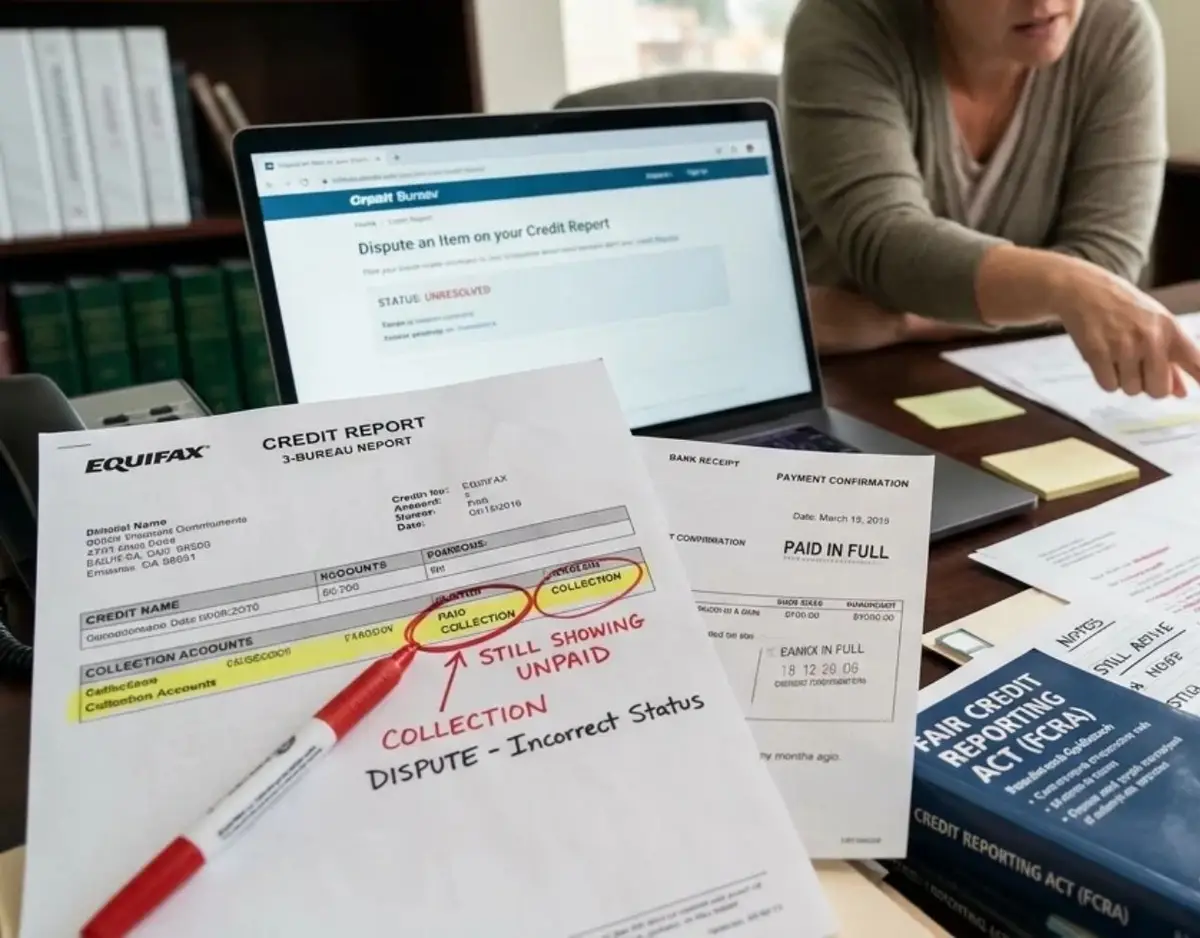
Table of ContentPaid Collection Still Reporting as Unpaid
You paid the collection. You saved the confirmation number. Maybe you even have a paid-in-full letter.
But your credit report still shows the account as unpaid, with a balance you no longer owe.
So you disputed it. The credit bureau came back with one word: verified.
That result is frustrating, but it doesn’t end your options. The Fair Credit Reporting Act (FCRA), a federal law that governs credit reporting, requires credit bureaus and debt collectors to report your payment status accurately. It also requires them to actually investigate when you dispute an error.
If a paid collection is still hurting your credit profile after a dispute, Raburn Kaufman LLC can help. Contact us today to request a free case review and have an attorney look at your reports.
What a Paid Collection Account Should Look Like on Your Credit Report
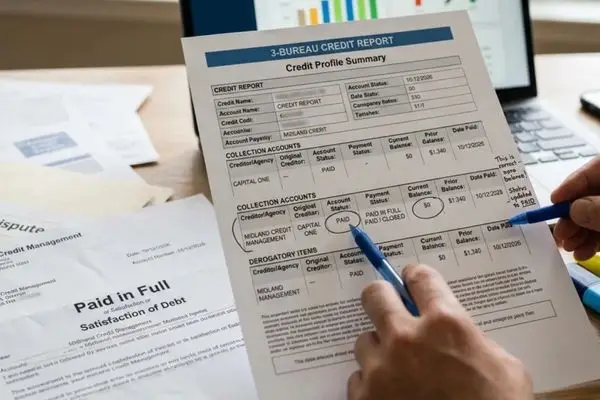
Paying a collection account does not make it disappear. An accurate collection can stay on your credit report for years after you pay it.
What should change is how it reports.
After you pay, the collection agency or debt buyer should send updated information to the credit bureaus (Equifax, Experian, and TransUnion) in its next reporting cycles. The bureaus should then show that update.
| Report Field | What It Should Show After You Pay | Red Flag |
|---|---|---|
| Balance | Zero balance | Any amount you already paid |
| Payment status | Paid collection, or settled | Unpaid, open, or still in collection |
| Date of last payment | The date you paid | Blank, or an older date |
| Original creditor’s account | Zero balance, often marked sold or transferred | Still shows the balance you paid to the collector |
| Dispute comment | Notes your dispute, if you disputed | No dispute notation after you disputed |
Paid in Full vs. Settled: Know Which Status Is Accurate
If you paid less than the full amount under a settlement agreement, a status like “settled” or “paid for less than full balance” may be accurate. That isn’t an error, even if “paid in full” would look better.
An error is a balance or an “unpaid” status after you met the settlement terms.
| How You Resolved the Debt | Accurate Status | Accurate Balance |
|---|---|---|
| Paid in full in one payment | Paid in full or paid collection | Zero |
| Finished a payment plan | Paid in full or paid collection | Zero |
| Debt settlement for less than owed | Settled or paid for less than full balance | Zero |
| Still making payments on a repayment plan | Open, with a reduced balance | What you still owe |
Why Paid Collections Keep Reporting as Unpaid
Most of these errors come from bad records, not bad luck. Common causes include:
- The collector never sent the update. Your payment posted, but the account stayed open in its system.
- The debt was sold. A debt buyer bought the account, and the old collector, the new buyer, or both still report a balance.
- The payment went to the wrong place. A payment portal or automatic payments setup applied your money to a different account number.
- The same debt is reported twice. The original creditor and the collection agency both show the balance. This is a form of duplicate debt reporting.
- An old account came back. A debt buyer reports an old, paid account as if it were new and unpaid. These are sometimes called zombie debts.
If your paid account shows different balances across the credit bureaus, the problem may come from how each bureau received the update.
Why an “Unpaid” Status Hurts More Than You Might Think
Many people assume a paid collection stops mattering once it’s paid. That’s only true when the report says it’s paid.
| Credit Scoring Model | Paid Collection | Unpaid Collection |
|---|---|---|
| FICO Score 9 and 10 | Ignored | Counted |
| VantageScore 3.0 and 4.0 | Ignored | Counted |
| FICO Score 8 and older models | Counted | Counted |
Newer scoring models can only ignore a paid collection if the bureau reports it as paid. A wrong status means the account counts as unpaid. The score impact depends on your full credit history.
The status matters beyond credit scores, too:
- Mortgage underwriting: An underwriter may ask you to pay or explain a collection you already paid. That can delay a mortgage loan or put it at risk. If you’re preparing for a mortgage, check your reports early.
- Loan and card applications: A lender may deny you or offer a higher rate, which raises your monthly payment.
- Housing: Landlords often review collections when you apply to rent.
A Note on Medical Collections
Under policies the three nationwide bureaus adopted in 2022, paid medical collections should no longer appear on your credit reports. If a medical collection you paid still shows up as unpaid, that’s worth a closer look.
Gather Your Payment Proof Before You Dispute
A dispute works best when it’s backed by documents. Before you send anything, collect:
| Document | Why It Matters |
|---|---|
| Paid-in-full letter | The collector confirms you owe nothing |
| Settlement letter or settlement agreement | Shows the agreed amount and that payment resolves the debt |
| Payment confirmation and confirmation number | Ties your payment to a date and an account |
| Bank or credit card statements | Independent payment proof that the money left your account |
| Payment plan records | Shows your final payment posted |
| Credit reports from all three bureaus | Shows exactly what each bureau reports |
| Denial or adverse action letters | Shows how the error affected you |
Pull your full reports, not just a summary. Credit monitoring apps don’t always show every detail of each tradeline.
How to Dispute a Paid Collection Still Reporting as Unpaid
Follow these steps to create a clear dispute record:
- Get your reports from all three bureaus. Note exactly which bureaus show the wrong status or balance.
- Dispute in writing with each bureau reporting the error. Name the account, explain that it’s paid, and attach copies of your proof. Keep copies of everything you send.
- Notify the collector directly, too. Under the FCRA, a company that reports information to the bureaus must correct information it learns is inaccurate. It must also report the account as disputed.
- Watch for the results. The bureau must complete a reasonable reinvestigation within a set time and send you the outcome.
- Compare the updated report to your proof. Check the balance, status, and dispute comment.
Where the FDCPA Fits
The Fair Debt Collection Practices Act (FDCPA) also bars debt collectors from reporting credit information they know or should know is false. That includes failing to report that a disputed debt is disputed.
Debt validation under the FDCPA is a different tool. It’s for questioning whether you owe a debt at all. When you’ve already paid, the issue is accuracy, so the FCRA dispute process is usually the main path.
Some people ask for a pay-for-delete agreement before they pay. Collectors aren’t required to agree to one. This article focuses on accounts you’ve already paid that report wrong.
When the Credit Bureau “Verifies” a Paid Collection as Unpaid
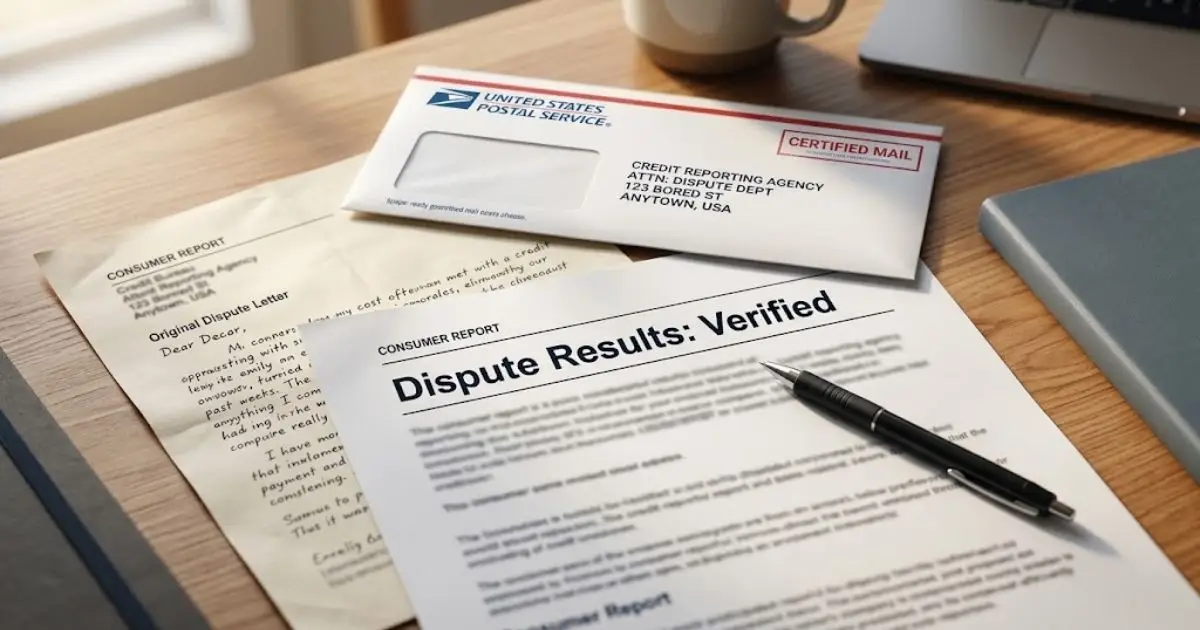
This is where many people give up. It’s also where many FCRA cases begin.
Here’s how a dispute often moves through the system. The bureau turns your dispute into a short code in an automated system called e-OSCAR. The collector gets that code, checks its own records, and confirms what it already reported.
Your paid-in-full letter may never get a meaningful review.
“Verified” doesn’t mean accurate. Under the FCRA:
- The bureau must conduct a reasonable reinvestigation and consider the relevant information you send.
- The bureau must pass your relevant information along to the collector.
- The collector must investigate and review what the bureau sends.
- Both must correct information that turns out to be inaccurate or can’t be verified.
Signs Your Dispute Got a Rubber Stamp
- The result came back unchanged, even though you sent payment proof.
- The results letter doesn’t mention your documents.
- The account still shows no dispute notation.
- The same error survives disputes with more than one bureau.
Next Steps After a “Verified” Result
- Ask the bureau how it reinvestigated. You have the right to request a description of the procedure it used, including the business name and contact information of the company it contacted.
- Add a statement of dispute to your file if you want lenders to see your side.
- Don’t send the same dispute again without new information. A bureau can reject a repeat dispute that adds nothing new.
- File a complaint with the Consumer Financial Protection Bureau (CFPB). You can also search the CFPB’s Consumer Complaint Database for debt collection complaints against the same company.
- Talk to a consumer protection attorney. A verified error after a documented dispute is often the start of an FCRA claim.
What You May Be Entitled To
If a bureau or collector broke the FCRA, you may be able to recover actual damages. These can include harm like a lost loan, a higher rate, or the stress the error caused.
For willful violations, the law also allows statutory and punitive damages. A court can order the company to pay your attorney fees and costs.
Every case is different, and results depend on the facts. FCRA claims also have a strict statute of limitations, so waiting can cost you options.
Talk to Raburn Kaufman About Your Paid Collection

Raburn Kaufman LLC is a consumer protection law firm that handles Fair Credit Reporting Act cases against credit bureaus, debt collectors, and other companies that report inaccurate information. The firm represents consumers nationwide in federal court.
Our credit reporting attorneys review your reports, payment proof, and dispute history. Then we explain whether a company may have broken the law and what your options are.
You paid the debt. Your credit report should say so.
Already disputed and still seeing “unpaid”? Schedule your free consultation today.
Frequently Asked Questions
Not automatically. An accurate collection can stay on your report even after you pay, but it should show a paid status and a zero balance.
Most collectors report monthly, so expect one or two reporting cycles. If it still shows unpaid after that, dispute it.
No. Federal law bars companies from reporting information they know or have reason to believe is inaccurate.
No. “Settled” means you paid less than the full amount under an agreement. Either way, the balance should be zero.
Free case review
Think This Is Happening to You?
An attorney can review your credit reports and records for free. You pay nothing unless we win.
Related: Credit Reporting Attorneys
Official resource
Fair Credit Reporting Act(opens in a new tab)
Federal Trade Commission. The full text of the federal law that governs credit reports and background checks.
Keep reading
Credit Report Errors
Paid Account Showing Different Balances Across Credit Bureaus? What You Can Do.
Paid off an account, but one credit bureau still shows a balance? Learn why the reports differ, how to dispute them, and when the FCRA is able to protect you.
Read Article
Credit Report Errors
Paid Off Your Credit Card but Your Report Still Shows a Balance?
Paid off a credit card but your credit report still shows a balance? Learn why it happens, how to dispute it, and how the Fair Credit Reporting Act protects you
Read Article
Credit Report Errors
Mortgage Paid Off, but Your Credit Report Still Shows a Balance?
Paid off your mortgage but your credit report still shows a balance? Learn why it happens, how it hurts your credit score, and what the FCRA law lets you do.
Read Article