

Paid Off Your Credit Card but Your Report Still Shows a Balance?
Paid off a credit card but your credit report still shows a balance? Learn why it happens, how to dispute it, and how the Fair Credit Reporting Act protects you
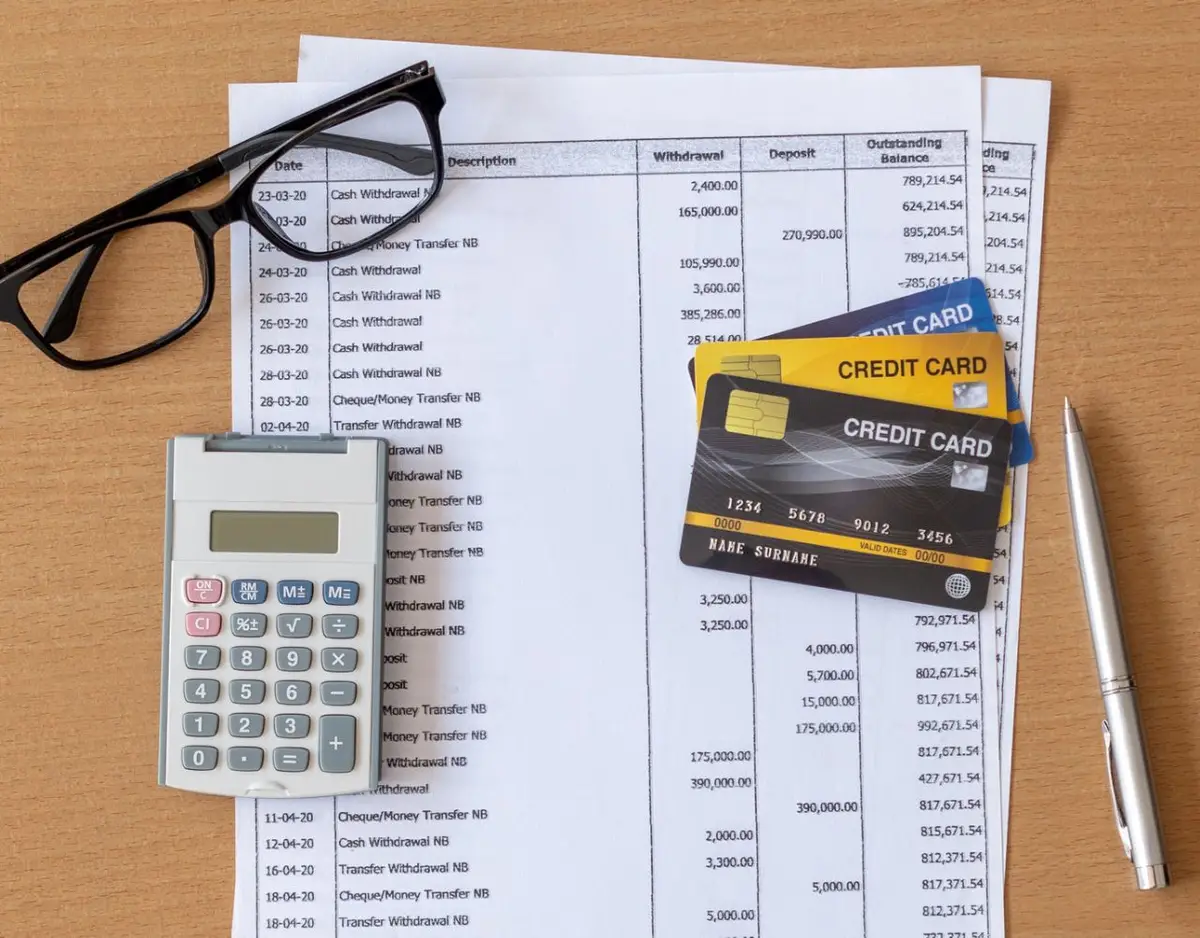
Table of ContentPaid Off Your Credit Card but Your Report Still Shows a Balance?
You made the final payment. Your card statement shows $0. Yet your credit report still lists the old balance, and your credit score has not moved. Maybe a lender just turned you down for a car loan because of it.
Sometimes that gap is normal timing. Other times, it is a reporting error that federal law requires companies to fix. At Raburn Kaufman, our credit report error attorneys use the Fair Credit Reporting Act (FCRA) to hold credit bureaus and lenders accountable when they report inaccurate information.

Give It 30 to 45 Days, Then Take a Closer Look
Most card issuers report to the three national credit bureaus (Equifax, Experian, and TransUnion) about once a month, usually after your billing cycle closes. A paid-off balance can take 30 to 45 days to appear on your credit report.
If the balance is still there after two full reporting cycles, the information may be inaccurate. Under the FCRA, you can dispute it with the credit reporting companies. They generally must investigate within 30 days, and the card issuer must correct anything it finds inaccurate or incomplete.
Related:
Learn more about how we apply the
for our clients.
Five Reasons a Card You Paid Off Can Still Look Unpaid
A credit card account does not update in real time. Your issuer sends a snapshot of your credit account (balance, credit limit, payment history, and account status) on its own schedule, not the day you pay. Here are the most common reasons an old balance lingers:
- The reporting cycle has not caught up. If you paid after your statement closed, the $0 balance may not reach the bureaus until next month.
- Interest charges posted after your payoff. Finance charges can build between your last statement and your final payment. That can leave a small balance on the next bill, so check your latest monthly statement before you assume an error.
- The account closed and stopped updating. Some creditors stop sending monthly updates on closed accounts, which can freeze the last reported balance in place.
- You moved the debt. If you paid the card with a debt consolidation loan or a balance transfer credit card, the old card should show $0 while the new account carries the balance. When both show the debt, your reported debt is counted twice.
- The data is simply wrong. The issuer may have reported the wrong payment status, or mixed your account with someone else’s.
How One Stale Balance Can Drag Down Your Credit Score
Your credit utilization ratio compares your card balances to your credit limits. Credit scoring models weigh it heavily. A $4,000 balance that should read $0 on a $5,000 limit makes you look 80% maxed out on that card.
Lenders also look at the monthly payment tied to each balance when they figure your debt-to-income ratio. A balance you already paid can lead to:
- A denial on a mortgage, apartment, or car loan
- A higher annual percentage rate on new credit
- Lower credit limits on new charge accounts
If a lender denied you or offered worse terms based on your credit report, keep that letter. It can matter later.

What Federal Law Requires Lenders and Credit Bureaus to Get Right
The FCRA is the federal law that governs consumer reports. It puts duties on two groups: the credit reporting companies that build your report, and the “furnishers” (like your card issuer) that send them your account data.
Under the FCRA:
- Credit bureaus must follow reasonable procedures to keep your report as accurate as possible.
- A furnisher that learns its information is incomplete or inaccurate must promptly correct it with every bureau it reported to.
- You have the right to dispute errors. A bureau generally must investigate within 30 days. That window can stretch to 45 days in some cases, such as when you send more information mid-investigation.
- The bureau must pass your dispute and proof to the card issuer, which must investigate and report back.
Disputing through the credit bureaus matters. It triggers the card issuer’s investigation duties, and those duties are enforceable in court.
When a Reporting Mistake Turns Into a Legal Claim
If a bureau or creditor fails to follow the law, you may be entitled to damages. A negligent violation can support actual damages. A willful violation can support actual damages or statutory damages of $100 to $1,000, plus possible punitive damages. The outcome depends on the facts of your case.
Timing matters too. An FCRA claim generally must be filed within two years after you discover the violation, and no later than five years after it happened.
Did you know?
The attorneys at Raburn Kaufman offer
Six Steps to Get Your $0 Balance on the Record
- Give it one full billing cycle, then check back. Pull your reports from all three bureaus for free at AnnualCreditReport.com. Errors do not always appear on every report.
- Gather your proof. Save your final payment confirmation, the bank statement showing it cleared, and the statement showing a $0 balance.
- Call the card issuer’s customer service line. Ask them to report the updated balance and send you a paid-in-full letter. Write down who you spoke with and when.
- Send a dispute letter to each bureau showing the error. Explain what is wrong, include copies (never originals) of your payment confirmations, and highlight the account on your report. Certified mail gives you a record.
- Keep every response. Save the bureau’s results, any updated reports, and any denial letters from lenders.
- Escalate if the error stays. You can file a complaint with the Consumer Financial Protection Bureau (CFPB) and talk with an FCRA attorney about whether your rights were violated.
Paid a Collector or Settled the Debt? Watch for These Problems
Card debt often changes hands. The original creditor may sell it to a debt buyer or assign it to a collection agency. After you pay or settle, more than one company may keep reporting a balance.
If you reached a settlement agreement, the account should show a $0 balance once you finish paying. Its status may read “paid collection” or “settled,” which is accurate. Paying does not erase accurate late payments from your credit history. A balance that still shows after a completed settlement, though, is a separate problem worth disputing.
Hold on to every settlement letter, validation letter, and payment record from the debt collector. Those documents often decide a dispute.
A Law Firm That Holds Credit Bureaus Accountable
Raburn Kaufman is a law firm, not a credit repair company. We do not promise to remove accurate information or raise your score by a set number of points.
Instead, our attorneys review your credit reports, dispute history, and denial letters. We look for signs that a credit bureau or creditor failed to follow the FCRA. When the facts support a claim, we pursue it. The FCRA also lets a court require the company that broke the law to pay reasonable attorney fees in a successful case.
You paid your debt. Your credit report should say so. If it still does not, contact Raburn Kaufman at (877) 398-5259 to talk with an attorney about your options.
Frequently Asked Questions
Usually 30 to 45 days. Most issuers report once a month after the billing cycle closes, and the bureaus then need time to process the update.
No. A closed account you paid in full should show a $0 balance. Its positive payment history can stay on your report, which can help your credit scores.
Not necessarily. A dispute asks the bureau to correct inaccurate information, such as a wrong balance. Accurate history, good or bad, can stay.
No. You can dispute errors with the bureaus yourself at no cost. If they fail to correct the error, an FCRA attorney can review whether the law was broken and what you can do about it.
An FCRA claim generally must be filed within two years of discovering the violation, and no more than five years after it occurred. Talk with an attorney early so you do not lose your window.
Free case review
Think This Is Happening to You?
An attorney can review your credit reports and records for free. You pay nothing unless we win.
Related: Credit Reporting Attorneys
Official resource
Fair Credit Reporting Act(opens in a new tab)
Federal Trade Commission. The full text of the federal law that governs credit reports and background checks.
Keep reading

Credit Report Errors
Mortgage Paid Off, but Your Credit Report Still Shows a Balance?
Paid off your mortgage but your credit report still shows a balance? Learn why it happens, how it hurts your credit score, and what the FCRA law lets you do.
Read Article
Credit Report Errors
Why Credit Karma Isn't Enough: What You're Missing on Your Credit Report
Nearly 130 million Americans use Credit Karma to monitor their credit scores. The app offers convenience and free access, but it only shows part of the picture.
Read Article
Credit Report Errors
Why Using AI Tools for Your FCRA Case Is a Costly Mistake
Consumers increasingly turn to artificial intelligence for answers to complex problems, and legal issues are no exception.
Read Article