

Declared Dead by Mistake: Correcting Deceased Status on Your Credit Report
Raburn Kaufman helps individuals declared dead by mistake correct inaccurate deceased status on their credit reports. See how legal support may help your case.
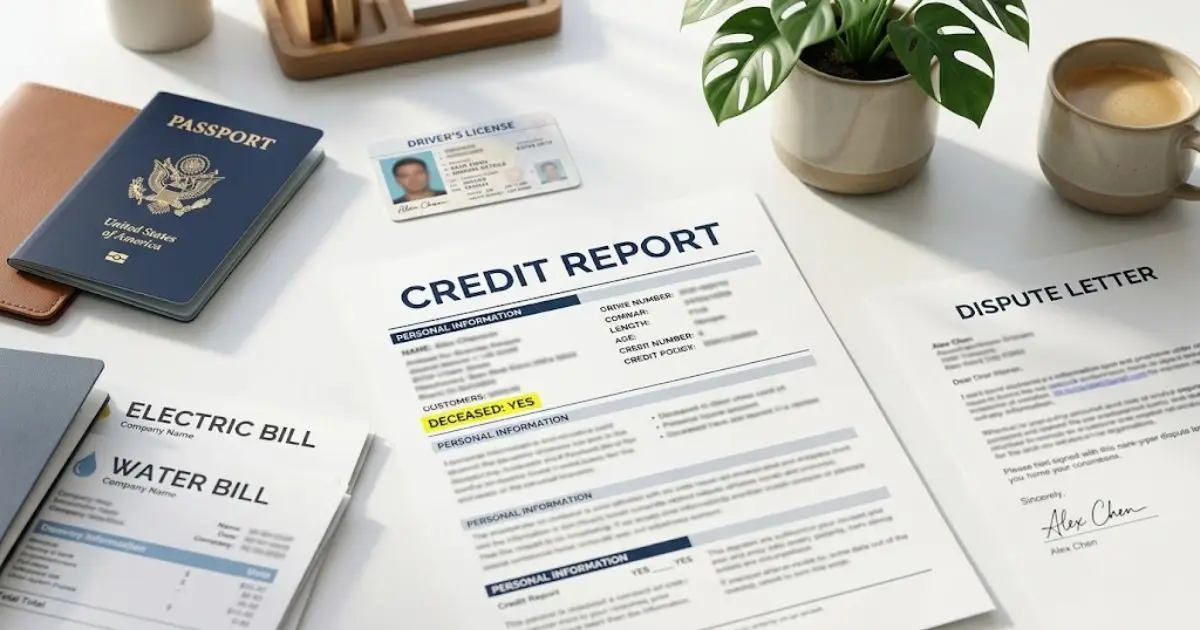
Table of ContentDeclared Dead by Mistake: Correcting Deceased Status on Your Credit Report
You’ve filled out your mortgage application, secured pre-approval, and begun planning your move. You’re expecting good news. Instead, you get a call that leaves you stunned.
“We can’t move forward. Your credit report shows you as deceased.”
It sounds like a punchline. However, for thousands of Americans every year, it’s a harsh reality. Being falsely declared dead by a credit bureau error isn’t a minor inconvenience. It’s a full-scale financial blockade that derails access to housing, employment, insurance, loans, and more.
One coding error, database misfire, or algorithmic mismatch can wrongly place a deceased status on your credit report, making your financial identity vanish.
Understanding What “Deceased” Means in Credit Reporting Systems
Credit reporting agencies like Equifax, Experian, and TransUnion use a “deceased indicator” when they receive notification that a consumer has passed away. The intent is protective: it prevents new credit accounts from being opened under the name of someone who’s no longer living and helps shield families from identity theft.
But when applied incorrectly, the deceased designation becomes a barrier for the very people it’s meant to protect. The error freezes your credit file. It triggers automatic denials for loans, freezes banking activity, and can lead to employment rejection.
And most devastatingly, it often comes without any warning—only discovered when you’re turned away from a critical opportunity.
How You Can Be Declared Dead by Mistake
This isn’t rare, and it’s not always clear how the error started. Here are the most common causes of false deceased status on your credit report:
- Typos in key identity fields, such as Social Security numbers or birth dates
- Mistakes within the Social Security Administration’s Death Master File (DMF)—a federal dataset relied on by creditors and data furnishers
- Mixed credit files, where data from two or more individuals gets merged due to overlapping identifiers
- Misdirected death reports from family members, especially when last names or addresses are shared
- Misuse of deceased individuals’ identity information, which then cross-contaminates your file
These mistakes don’t just affect one account but cascade across multiple systems. Once your file is flagged as deceased, it gets replicated into background check databases, insurance risk profiles, banking platforms, and public records. Your credit becomes a ghost in the machine.
Immediate Consequences of a False Deceased Flag
Being falsely marked as dead on credit reports means:
- Loan Applications Are Automatically Rejected: Mortgage lenders, car financing teams, and personal credit providers rely on bureaus for pre-screening. A deceased flag shuts everything down.
- Credit Card Access Is Terminated: Open accounts may be closed without notice. Applications for new credit lines may fail instantly.
- Banking and Deposits Are Disrupted: Your checking and savings accounts may be frozen. Direct deposits can bounce. Debit cards may stop working.
- Employment Opportunities Are Blocked: Employers conducting background checks may receive flagged or incomplete reports. This is especially damaging in regulated professions.
Most consumers don’t know why they’re being rejected. The deceased marker is buried deep in the report, visible only through thorough inspection, which makes it so dangerous.
The Emotional Reality Behind the Data
There’s something fundamentally destabilizing about having a deceased status on your credit report, especially when it’s reported inaccurately.
It’s not just about inconvenience. It’s about identity, dignity, and autonomy. Clients frequently describe the shock of hearing they’ve been marked as dead while trying to make real, forward-moving decisions. Some are seeking housing for their families, while others are switching careers. Some are battling health challenges and need insurance coverage. To be told your identity is invalid—based on a bureaucratic error—is overwhelming.
And explaining the error is rarely simple. Lenders, employers, and landlords rely on data. If the report says you’re deceased, they often move on. No conversation. No override. Just rejection.
The Legal Framework That Protects You: The Fair Credit Reporting Act
The Fair Credit Reporting Act (FCRA) is a federal law that governs how consumer credit information must be managed, shared, and corrected. Under the FCRA:
- You have the right to accurate data in your consumer report
- Credit bureaus are legally obligated to maintain reasonable procedures to ensure the accuracy of consumers’ reports
- If an error causes harm, and the responsible party refuses to correct it appropriately, you may be entitled to compensation
- You must be notified when credit decisions are made based on your report—especially when the result is denial
Being declared dead by mistake is not just frustrating—it’s a serious FCRA violation of federal law. If that error results in financial loss, emotional distress, or denied access to credit, employment, or housing, legal recourse may be available.
Why This Happens Nationwide
You don’t have to live in one particular city or state to experience this. FCRA credit reporting violations are a national issue. We’ve seen errors like this impact individuals in:
- Major metropolitan areas where identity overlaps are common
- Rural communities where data input errors occur at the local level
- Military families dealing with multiple address histories
- College students applying for financial aid
- Retirees looking to refinance or reenter the housing market
Wherever your name, birthdate, or Social Security number can be miskeyed or mismatched, the risk exists. And once your credit report is tainted with a deceased notation, it may seem nearly impossible to correct without the right legal pressure.
Why Legal Advocacy Is Critical
When you’re up against a credit bureau, it’s not just about getting a call returned. It’s about understanding internal procedures, knowing what qualifies as an acceptable investigation, and recognizing when a response is inadequate under the law.
Attorneys who focus on credit reporting violations know:
- When credit bureaus have failed to meet their legal obligations
- What types of documentation and evidence matter most
- How to escalate violations through the right channels
- How to build a strong case for compensation when harm has occurred
Most importantly, attorneys don’t walk away when the process gets frustrating. An experienced credit attorney will be able to guide you through the legal process, providing you peace of mind along the way.
Raburn Kaufman Represents Clients Nationwide
At Raburn Kaufman, we’ve worked with individuals across the United States—from coast to coast—who’ve been wrongfully marked as deceased on their credit reports. We’ve seen how damaging these errors can be. We’ve heard from clients who were turned away from apartments, jobs, and credit cards—not because of any wrongdoing, but because someone else’s data was included in their credit file.
We know how to hold credit reporting agencies and bureaus accountable under the Fair Credit Reporting Act. And we know that behind every error is a person whose life, goals, and future are being unfairly affected by credit reporting errors.
Your identity matters. Your credit history matters. Call Raburn Kaufman to discuss your options for recovery under the FCRA.
Whether your false deceased status originated with Equifax, Experian, TransUnion, or a data furnisher like a bank, employer, or screening company—we can help.
Your Story Is Not Over
Being wrongly declared dead by a credit reporting agency is jarring, destabilizing, and unlawful. It doesn’t just affect your financial tools—it affects your ability to participate in everyday life.
Contact Raburn Kaufman today for a free consultation. We represent consumers nationwide with no upfront cost.
Your credit file should reflect the truth. Your financial profile should support your goals. And your name should never be stripped of its meaning because a database got it wrong.
Let us help you correct false deceased credit report errors and reclaim your story—and restore your rightful place in the systems that shape it.
Share
Free case review
Think This Is Happening to You?
An attorney can review your credit reports and records for free. You pay nothing unless we win.
Related: Deceased Reporting Errors
Official resource
Disputing errors on your credit reports(opens in a new tab)
Federal Trade Commission. How to dispute with the credit bureau and with the company that reported the error.
Keep reading

Credit Report Errors
Why Credit Karma Isn't Enough: What You're Missing on Your Credit Report
Nearly 130 million Americans use Credit Karma to monitor their credit scores. The app offers convenience and free access, but it only shows part of the picture.
Read Article
Credit Report Errors
Why Using AI Tools for Your FCRA Case Is a Costly Mistake
Consumers increasingly turn to artificial intelligence for answers to complex problems, and legal issues are no exception.
Read Article
Credit Report Errors
Preparing for a Mortgage? Watch Out for Credit Errors
A credit report error can stall a mortgage application. Learn which errors to look for before you apply and how to dispute them under the FCRA before closing.
Read Article